The Best Dishwasher Brands Over $1,000 in 2026
Once you cross the $1,000 mark, the question changes. At this level, brands start making very different bets about what matters most — drying, loading flexibility, convenience, or long-term ownership.
Most good dishwashers already clean well and run quietly enough. Premium models are where the differences become more meaningful: rack design, drying systems, filtration, detergent handling, serviceability, and how the product is built to age. But paying more still doesn’t guarantee fewer repairs, and we’ll be straight about that.
You’re not just paying for more features. You’re paying for a different ownership experience.
Our Approach
This is where we stop counting features and start asking what the extra money actually gets you.
Find Your Best Match
Three Brands. Three Different Reasons We’d Buy Them.
There isn’t one right answer here. Each of these brands makes a strong case for a different kind of household.
Above $1,000, the gaps widen meaningfully: in drying performance, racking design, detergent systems, and long-term reliability. Features vary by model, so start with the strengths that matter most to you.

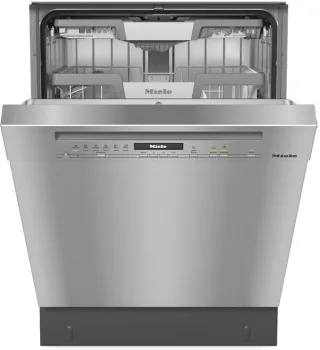
Miele — The Long-Term Buy
Ideal for households willing to spend more for strong wash and dry performance, flexible racking, and a dishwasher chosen with long-term ownership in mind
Miele is where we’d look when the reason you’re spending more is ownership, not just features. Cleaning, drying, rack design, and durability feel like parts of the same machine rather than upgrades layered on top.
Strengths
- Strong cleaning and drying across the current lineup
- Thoughtful rack and tray systems for mixed loads
- Durability testing gives the long-ownership story real substance
- Useful upgrades such as AutoOpen, QuickIntenseWash, and AutoDos as you move through the lineup
Tradeoffs
- Prices climb quickly as you move through the G7000 lineup
- Local Miele service is worth checking before you commit
- AutoDos only works with Miele PowerDisk detergent cartridges. You can still use regular dishwasher detergent manually, but using the automatic dispenser means buying Miele’s proprietary PowerDisks.
If you want premium to mean long-term ownership rather than simply more features, Miele makes the clearest case.

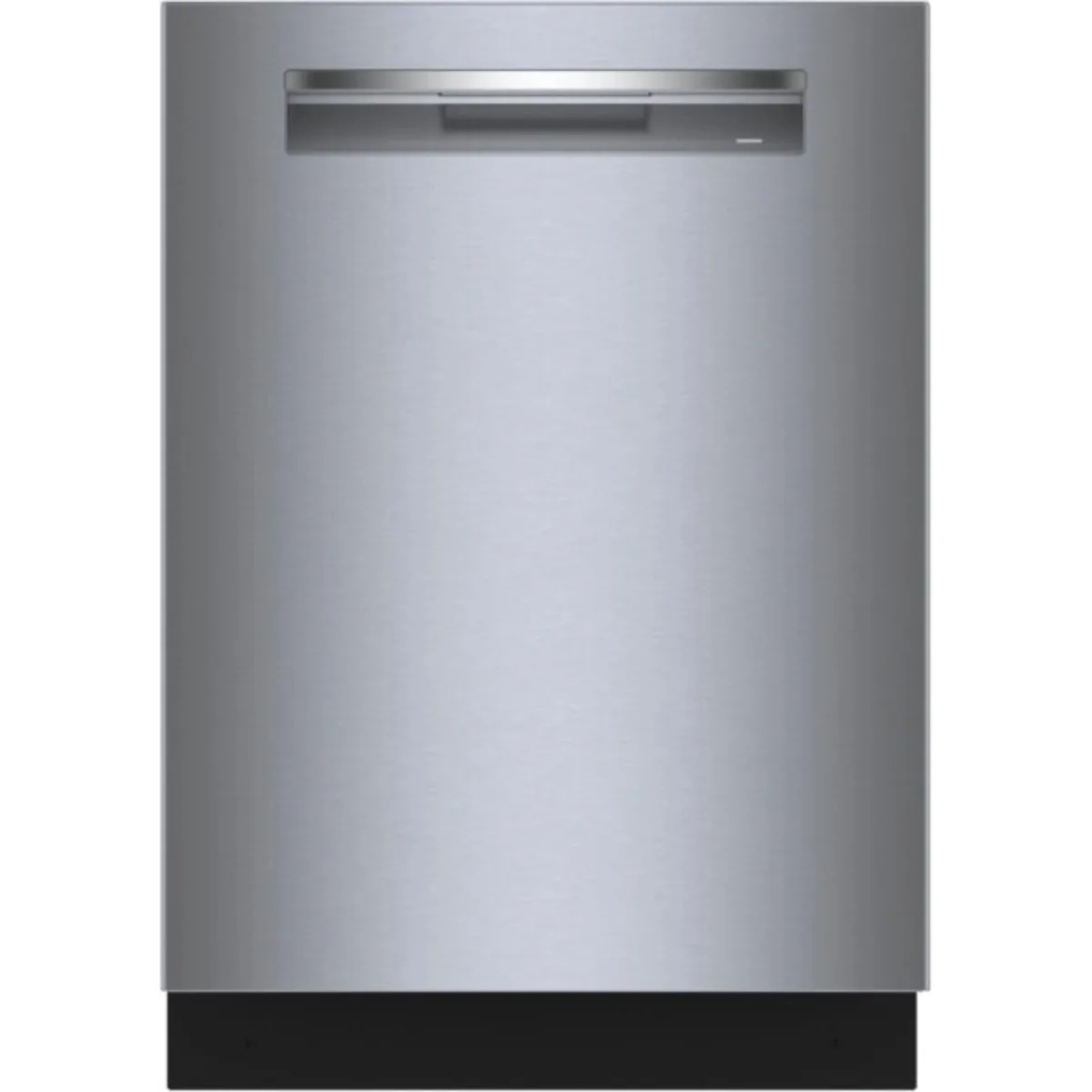
Bosch 800 — The Drying Upgrade
Ideal for households that want especially strong drying, very quiet operation, and a polished everyday dishwasher
Bosch 800 is where we’d look when drying — especially plastics — is the reason you’re willing to spend more. CrystalDry is the headline feature, but the rest of the machine is strong enough that you’re not buying a one-trick dishwasher.
Strengths
- CrystalDry is a genuine step up for drying, including plastics
- 42 dBA operation works well in open-concept kitchens and nearby living spaces
- PrecisionWash with PowerControl gives you more control over where extra cleaning is needed
- Flexible third-rack and EasyGlide hardware make the racks feel appropriately premium
Tradeoffs
- Bosch’s lower series already cover the fundamentals well for less
- The 800 Series premium makes the most sense when drying really matters to you
- The filter still needs periodic manual cleaning
If wet plastics are the frustration that finally pushed you into premium territory, Bosch 800 Series is where we’d start.

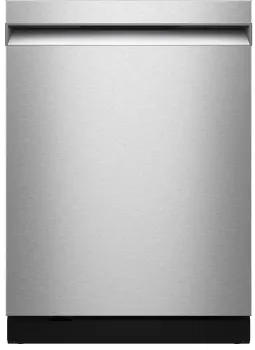
KitchenAid — The Flexible Choice
Ideal for households that regularly wash large cookware and want as much usable loading space as possible
KitchenAid makes the strongest case when the problem is simply fitting everything in. Its premium models give you a huge usable tub, a third rack that can handle much more than utensils, and drying upgrades that make sense for households that regularly fill the machine.
Strengths
- 7.25 cu. ft. MaxTub gives you unusually high usable loading volume
- 360° Max Jets third rack can handle glasses, mugs, bowls, and cooking tools
- Advanced ProDry adds a more serious drying system
- Self-cleaning filtration removes one routine maintenance job
Tradeoffs
- KitchenAid already gives you a lot of its core dishwasher experience below $1,000
- Spending more makes the most sense if the extra loading space or upgraded drying solves a real problem
- Bosch 800 Series is quieter at 42 dBA than the 44 dBA premium KitchenAid models we’re considering here
If the hardest part of using your dishwasher is figuring out how to make everything fit, this is where KitchenAid earns the step-up.
Shown: Miele G 7216 SCU — Higher-tier example in this price range
Notable Features Across the Lineup
42–44 dBA in the Miele models we’d focus on here
The G 7216 SCU runs at 42 dBA, while the more approachable G 5008 SCU Active sits at 44 dBA.
Tested for the equivalent of 20 years’ service life
This is part of what gives Miele its long-ownership story. It is a durability test, not a 20-year ownership guarantee.
Thoughtful rack design
The G 7216 SCU brings Miele’s 3D MultiFlex tray and ExtraComfort baskets, while the G 5008 SCU Active gives you a simpler but still solid basket system.
QuickIntenseWash
A useful fast-cycle option that still fits the premium-use case.
AutoOpen drying and Miele@home on the step-up model
The G 7216 SCU adds meaningful convenience features without turning the machine into a gimmick-driven product.
Miele — The Long-Term Buy
Ideal for households willing to spend more for strong wash and dry performance, flexible racking, and a dishwasher chosen with long-term ownership in mind
Miele is where we’d start for a buyer who sees the dishwasher as a long-term purchase and is willing to spend more for the engineering behind that idea.
That reputation has some substance behind it. Miele tests development models and core components from its G5000 and G7000 dishwasher families to simulate 20 years of average household use. That is not a promise that every machine will last 20 years, but it tells you something about the durability target behind the design. Miele also says original replacement parts remain available for at least 15 years after a series is discontinued, which matters if you’re buying with long ownership in mind.
The G 7216 SCU is a good example of why we like Miele without climbing into the very top of the lineup. It runs at 42 dBA and adds AutoOpen drying, a 3D MultiFlex tray, ExtraComfort baskets, QuickIntenseWash, and Miele@home. The less expensive G 5008 SCU Active gives up some of those conveniences but keeps much of the basic Miele proposition intact.
There is one ownership detail worth knowing before you buy: Miele racks can feel a little different at first. The tine spacing and loading pattern are more European than what you may be used to from KitchenAid or Whirlpool. Once you understand how the racks are meant to be loaded, they make a lot of sense, but there can be a short adjustment period.
Why You'll Love It
- Strong cleaning and drying without relying on one headline feature
- 42 dBA operation on the G 7216 SCU is comfortably quiet for an open kitchen
- 3D MultiFlex and ExtraComfort racks give mixed loads useful flexibility
- AutoOpen drying is simple, practical, and effective
- Miele’s durability testing and long parts-support window give the long-ownership story more substance than premium branding alone
What To Know
- The 20-year testing is an engineering benchmark, not a lifespan guarantee
- Miele’s rack layout may take a little getting used to if you’re coming from a more traditional American-style dishwasher
- Local service is worth checking before you commit
- Prices rise quickly once you move farther into the G7000 lineup
- You do not need the most expensive Miele to get the parts of the brand we find most compelling
Something to Consider
If the G 7216 SCU feels like more Miele than you need, we’d also look at the G 5008 SCU Active. It gives up some of the step-up conveniences, but it still gets you into the Miele ownership story at a more approachable price.
Best For
Households willing to spend more because they care about long ownership, quiet operation, flexible loading, and a dishwasher that feels engineered as a complete system rather than around one standout feature.
Something to Consider
If the G 7216 SCU feels like more Miele than you need, we’d also look at the G 5008 SCU Active. It gives up some of the step-up conveniences, but it still gets you into the Miele ownership story at a more approachable price.
Shown: Bosch SHP78CM5N — 800 Series example in this price range
Notable Features Across the Lineup
42 dBA
Very quiet in normal use. We would not choose the 800 over the 500 Series for the two-decibel difference alone.
CrystalDry
Uses zeolite minerals to absorb moisture and release heat, with plastics being one of the clearest places you can notice the difference.
PowerControl
Lets you vary cleaning intensity across different areas of the lower rack so tougher cookware and more delicate items can share a load.
Flexible third rack
Creates useful extra space for utensils and smaller items without taking room away from the lower racks.
AquaStop leak protection
Monitors for leaks and adds another layer of protection around an appliance that may spend a decade connected to your water supply.
Bosch 800 — The Drying Upgrade
Ideal for households that want especially strong drying, very quiet operation, and a polished everyday dishwasher
Bosch 800 Series is where we’d look when better drying is the reason you’re willing to spend more.
Bosch already makes a very good dishwasher before you reach the 800 Series. In fact, the 500 Series is probably the more sensible stopping point for a lot of households. The 800 earns its extra money mainly by fixing one recurring annoyance at the lower tiers: wet plastics.
CrystalDry uses zeolite, a mineral that absorbs moisture and releases heat, helping plastic containers, lids, and cups dry much more completely than they do with condensation drying alone. That sounds minor until you are the person towel-drying food-storage lids after every load.
PowerControl is the other meaningful step up. It lets you vary cleaning intensity across different sections of the lower rack, so a baked-on casserole dish and more delicate items can share the same load. The SHP78CM5N also runs at 42 dBA, but we would buy the 800 for its drying and wash flexibility — not for a two-decibel improvement over the 500 Series.
Why You'll Love It
- CrystalDry tackles one of the most annoying dishwasher problems: plastics that still need towel drying
- PowerControl lets tougher cookware and more delicate items share a load without treating everything the same way
- 42 dBA operation is comfortably quiet for an open kitchen
- AquaStop leak protection adds useful peace of mind around an appliance permanently connected to water
- The third rack and rack hardware give the interior an appropriately premium feel
What To Know
- The Bosch 500 Series already gives you much of the everyday Bosch experience for less
- The removable filter needs periodic cleaning
- KitchenAid is easier to recommend if large cookware and usable loading space are your biggest frustrations
Something to Consider
If plastics are not the problem you’re paying to solve, we’d look hard at the Bosch 500 Series first. It gives you much of the everyday Bosch experience for less. The 800 Series earns the step-up when you specifically want CrystalDry and PowerControl.
Best For
Households that are tired of putting away wet plastics and want a very quiet, polished dishwasher with more control over how different parts of the load are washed.
Something to Consider
If plastics are not the problem you’re paying to solve, we’d look hard at the Bosch 500 Series first. It gives you much of the everyday Bosch experience for less. The 800 Series earns the step-up when you specifically want CrystalDry and PowerControl.
Shown: KitchenAid KDPS624SPS — Higher-tier example in this price range
Notable Features Across the Lineup
44 dBA
Quiet enough for everyday open-kitchen use. Bosch 800 is quieter on paper at 42 dBA, but noise should not be the main reason to choose between these two.
7.25 cu. ft. MaxTub
Creates unusually high usable loading volume and gives large cookware more room to coexist with the rest of the load.
360° Max Jets third rack
Uses dedicated wash jets so the third rack can handle glasses, mugs, bowls, and cooking tools instead of acting only as a utensil tray.
Advanced ProDry
Adds fan-assisted drying for households that regularly run large mixed loads.
True Self-Cleaning Filtration
Reduces the routine filter-cleaning chore found on many filter-based dishwashers.
KitchenAid — The Flexible Choice
Ideal for households that regularly wash large cookware and want as much usable loading space as possible
KitchenAid is where we’d start when spending more is really about fitting more and rearranging less.
Its premium dishwashers make their strongest case inside the tub. The 7.25-cu.-ft. MaxTub gives you a lot of usable space, and the 360° Max Jets third rack is not just an oversized silverware shelf. It can handle glasses, mugs, bowls, cooking tools, and other awkward items that would otherwise occupy valuable space below.
That matters if your dishwasher loads look less like place settings and more like sheet pans, mixing bowls, pots, pans, travel mugs, and whatever else accumulated during dinner.
KitchenAid’s rack philosophy is also a little more familiar to many American households than Miele’s. The spacing tends to be friendlier to larger cookware, and you do not have to rethink the way you load the machine quite as much.
The step-up models also add Advanced ProDry and True Self-Cleaning Filtration. The filtration point is easy to overlook on a spec sheet, but it is a real ownership convenience. Bosch and Miele owners generally need to pull and rinse their filters periodically. KitchenAid’s self-cleaning system reduces that routine maintenance.
Why You'll Love It
- 7.25-cu.-ft. MaxTub creates a lot of usable loading space
- The 360° Max Jets third rack can handle glasses, mugs, bowls, and cooking tools — not just utensils
- Advanced ProDry is useful for households running large, mixed loads
- True Self-Cleaning Filtration reduces routine filter maintenance
- The rack layout is especially friendly to large cookware and awkward items
What To Know
- KitchenAid already gives you much of its core dishwasher experience below $1,000
- At around 44 dBA, these models are quiet, but Bosch 800 is quieter on paper at 42 dBA
- If long-term ownership is your main reason for spending more, Miele makes the stronger case
- If drying plastics is your biggest frustration, Bosch 800 has the more targeted solution
Something to Consider
KitchenAid gives you a lot of its core dishwasher experience below $1,000. We’d spend more here only if the larger-capacity rack system, upgraded drying, self-cleaning filtration, or other premium touches solve something you actually care about.
Best For
Households that cook frequently, fill the dishwasher with large pots and pans, and regularly feel like fitting everything into one load is the hardest part of doing the dishes.
Something to Consider
KitchenAid gives you a lot of its core dishwasher experience below $1,000. We’d spend more here only if the larger-capacity rack system, upgraded drying, self-cleaning filtration, or other premium touches solve something you actually care about.
How We See It
Spend More for the Right Reason.
If we were trying to stay reasonably close to $1,000, we probably wouldn’t stretch all the way into the most expensive models here. KitchenAid gives you excellent usable space and rack flexibility for the money, while Bosch 500 Series gets you much of the everyday Bosch experience with quiet operation and improved drying. For a lot of households, either one may be enough dishwasher.
Move farther up the budget and Bosch 800 Series starts making a very strong case. CrystalDry is one of those premium features that solves a problem you can actually see — especially if you’re tired of pulling wet plastics out of the dishwasher — and PowerControl gives the extra money another useful job. If you find an 800 Series around the lower end of its typical premium price range, it can be an excellent value.
But once Bosch 800 and Miele are sitting close enough in price, we would buy the Miele.
All things being equal, we think Miele gives you the more complete premium dishwasher: strong washing and drying, thoughtful loading, a serious long-ownership engineering story, and unusually long parts support. Bosch 800 comes very close, and there are households where we would absolutely choose it instead, but at comparable money Miele would be our default.
KitchenAid can still become our choice if your dishwasher regularly gets packed with large cookware and usable loading space matters more than anything else. Bosch or KitchenAid can also make more sense if you’re buying a matching kitchen package and the bundle pricing, coordinated design, or dealer incentives materially improve the value. And if qualified Miele service is difficult to get where you live, that alone can move Bosch ahead.
That is really the point of shopping this category by price instead of assuming more expensive means better. Around $1,000, KitchenAid and Bosch 500 give you a lot for the money. Spend more and Bosch 800 or Miele start giving you things that are harder to get below that level.
So our advice isn’t that everyone should buy the Miele. It’s that Miele is the one we’d choose when the price, service, and installation all line up. The others earn their place because real households don’t always line up that neatly.
If none of these premium upgrades solves a problem you actually have, our dishwasher guide under $1,000 may be the better place to shop.